


Why doesn't the Bundeswehr guard itself anymore?
In short: Civil security services guard Bundeswehr properties because the Bundeswehr, after downsizing its troops and suspending conscription, cannot deploy enough of its own personnel for guard duty and should focus on its core tasks. The guard duties are publicly advertised. Trained guards are employed; they are armed only when the assignment requires it and they meet the legal requirements.
Privatization of the German Armed Forces security services: What is behind it?
Lately we have received many comments on our job postings for armed security personnel for Bundeswehr sites, in which readers wonder why the Bundeswehr isn’t doing this itself.
Why isn't the Bundeswehr guarding itself anymore? The reasons in summary
Here is the answer: First of all, there are clear working time limits for female soldiers: According to the Soldiers’ Working Time Regulation (SAZV, effective January 1, 2016), the regular working time is 41 hours per week; on average over twelve months, it may not exceed 48 hours, including overtime.
This is not enough to provide continuous security for properties. On the other hand, the Bundeswehr is busy with other tasks. These include, for example, the training of soldiers, readiness for deployment, and deployments abroad. The security of the properties is not the core task of the Bundeswehr.
In addition, there is the downsizing of the troops: According to the German government, the decision to privatize security services was made in 2012. Among the reasons cited are the troop reduction, the suspension of conscription (2011), and the realignment of the German Armed Forces. Moreover, self-protection would require a significant number of personnel.
Since when and to what extent do civilian services guard Bundeswehr properties?
According to the Federal Government, the Bundeswehr properties to be monitored have been industrially monitored since 2017. As of 2020, this included 398 properties with around 8,000 industrial security personnel. The Bundeswehr is to be able to focus on its core tasks.
What tasks does the security service have on Bundeswehr grounds?
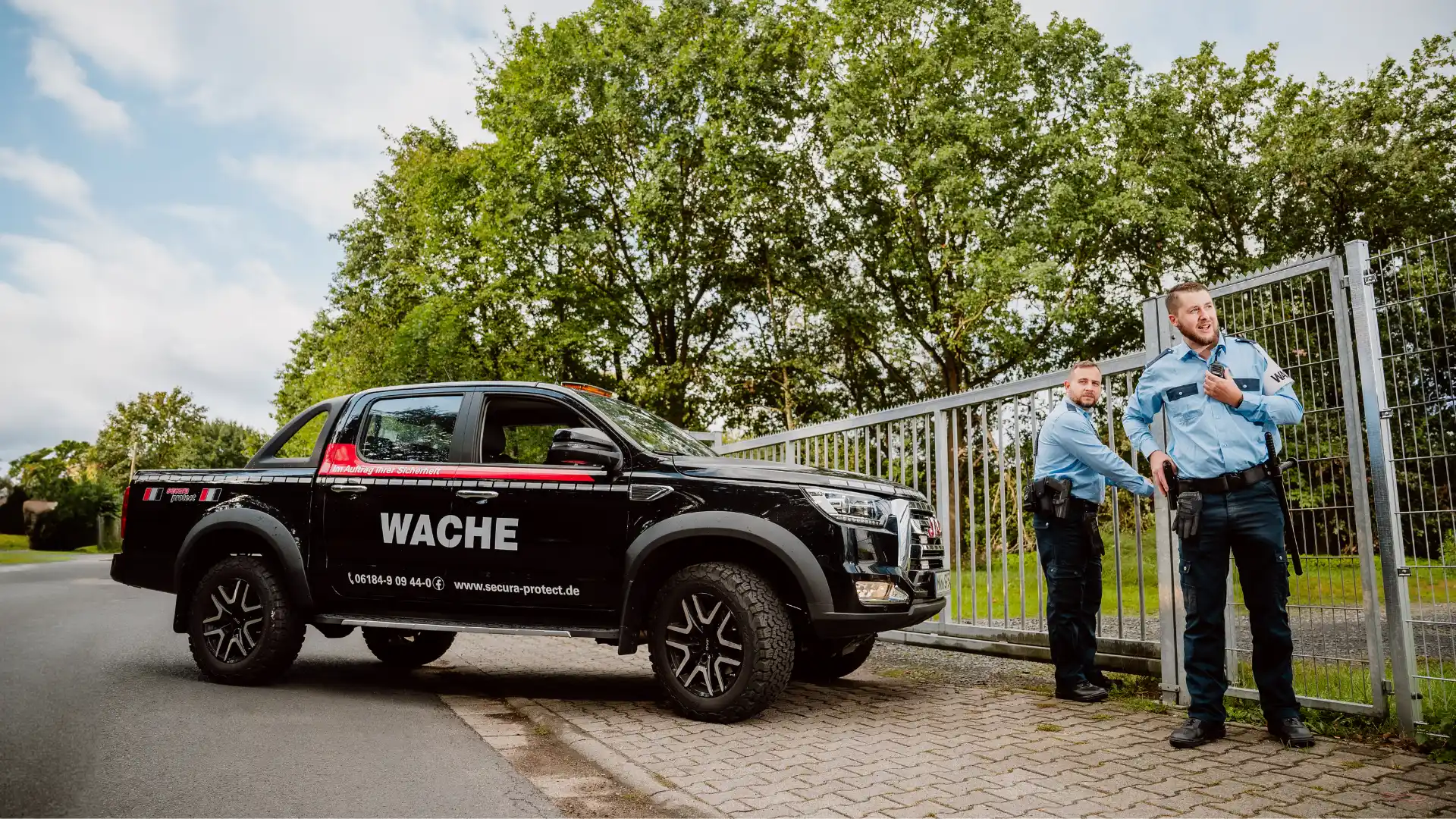
The guard service protects the area designated as the ‚security zone‘, which usually includes military areas and military security areas, from unauthorized access, prevents crimes against the Bundeswehr, protects against espionage, sabotage and destruction, and monitors the military order.
The tasks of the security service on military bases are diverse. These include, among other things:
- Control of access to the premises
- The surveillance of the premises
- Conducting patrols
- Reporting and initial measures in the event of fires and accidents
- Support for the police in operations
In some cases, the security forces are also armed. They are then allowed to use firearms to protect themselves and others.
How are watch orders awarded?
The security contracts are publicly advertised; the contractors are companies in the security industry. According to the Federal Government, the procedures for the Federal Armed Forces Service Centers serve as contracting authorities.
The following aspects are decisive when awarding contracts for the security of German military sites:
- The qualification and experience of the security company
- The proposed security concept
- The price
- The duration of the contract
What verification is necessary for security personnel?
Security guards at Bundeswehr properties are checked before deployment. According to the German government, security checks usually take at least six months.
Criticism of the hiring of private security services
The hiring of private security services is not without controversy. Critics fear that private security personnel do not possess the same knowledge and skills as soldiers, or see a privatization of sovereign tasks. The Federal Government, however, views the awarding of contracts to companies in the security industry as proven and has no evidence of security-related incidents involving private security services (as of 2020).
Should civilian security guards be armed?
Yes, but only under strict conditions. Article 28 of the Firearms Act stipulates that security companies may only use firearms if orders require it, and only when the actual execution of a specific order is required (Paragraphs 1 and 2). Security personnel who are to carry firearms must be appointed by the competent authority and obtain their approval (Paragraph 3).
Personal requirements include, among other things:
Full age, Unblemished character (reliability), Fitness to possess a firearm (personal fitness), Specialist psychological examination (for persons under 25 years of age), Physical fitness.
The professional requirements include, among other things:
At a minimum, the instruction required by § 34a GewO, weapons knowledge for professional gun owners, theoretical and practical training in the handling of firearms, and knowledge of the UZwGBw
Training in the handling of firearms
The training must be conducted by an accredited training institute. It covers topics such as firearms science, firearms expertise, weapons and shooting sports law, and field training. These knowledge and skills must be regularly repeated and regularly reviewed by security companies.
In short
This addition makes it clear that the use of firearms by private security forces in Germany is strictly regulated. Security personnel must meet certain personal and professional requirements in order to be allowed to carry firearms.
secura protect as a partner of the German Armed Forces
We understand the questions and concerns of those who wonder about the security of Bundeswehr grounds by private security services. We would like to emphasize that secura protect has neither made this decision nor formed any political opinion regarding it. As a security company, secura protect is committed to taking on security-related tasks, which specifically include the guarding of Bundeswehr grounds.
secura protect is a security service provider with more than 20 years of experience in guarding sensitive facilities.
secura protect develops individual security concepts for each Bundeswehr site. These concepts take into account the specific conditions and requirements of the respective site. We are aware of the responsibility associated with this sensitive task.
Further information on the security of properties
Conclusion
The surveillance of Bundeswehr properties by private security services is a political decision, with arguments for and against. Everyone can form their own opinion about it. We show how the surveillance works in practice and what prerequisites security personnel must meet.
Are you looking for a job in the security of military properties?
If you are interested, you should definitely bring the following with you:
- At least notification according to § 34a GewO
- Firearms knowledge for professional firearm users
- (psychological examination for people under 25 years of age)
- Physical fitness
- Ability to work shifts and work on weekends and holidays
On our career page you can find all the jobs that are currently available. Use the filter options and the direct application function.
FAQ - Frequently asked questions about the security of Bundeswehr properties
Who guards the Bundeswehr properties?
According to the Federal Government, the properties under surveillance for the German Armed Forces are being monitored commercially by security guards from private security companies working on behalf of the Federal Government. The German Armed Forces themselves focus on their military duties.
Should civilian security guards be armed?
Yes, but only if the assignment requires it and only during duty. The security guard must be appointed by the authority and meet the personal and professional requirements, including reliability and firearm proficiency (§ 28 WaffG). More about it
What qualification and verification is required?
At a minimum, the training required under § 34a of the GewO includes instruction in the use of weapons for armed operations, as well as basic knowledge of weapons for professional users. Those under 25 must undergo a specialist psychological assessment; physical fitness and a willingness to work in shifts, on weekends, and on holidays are also expected. Reliability is also checked before deployment.
How are watch orders awarded?
Through a public tender. The qualification and experience of the company, the security concept, the price and the duration of the contract will be evaluated.
What is the difference from soldiers on duty?
Soldiers are subject to the Soldiers' Working Time Regulation (regularly 41 hours per week, maximum 48 per twelve months), and they have primarily military duties. Civilian security guards are employees of private security companies who are trained and deployed for security duty.
What does a civilian security guard earn on Bundeswehr properties?
The remuneration is based on the applicable collective bargaining agreement for the security and safety industry and may vary depending on the federal state and function. You can find suitable positions here. Job offers
Sources
- German Bundestag: Response of the Federal Government to the small request regarding private security services in military barracks, Drucksache 19/17622 of 05.03.2020 (dserver.bundestag.de/btd/19/176/1917622.pdf)
- Regulation on the working hours of female soldiers (SAZV), §§ 5, 5a (gesetze-im-internet.de/sazv/)
- Arms Act (WaffG), §§ 4 and 28 (gesetze-im-internet.de/waffg_2002/)
- Law on the application of direct coercion … (UZwGBw) (gesetze-im-internet.de/uzwgbw/)
- Commercial Code (GewO), § 34a (gesetze-im-internet.de/gewo/__34a.html)